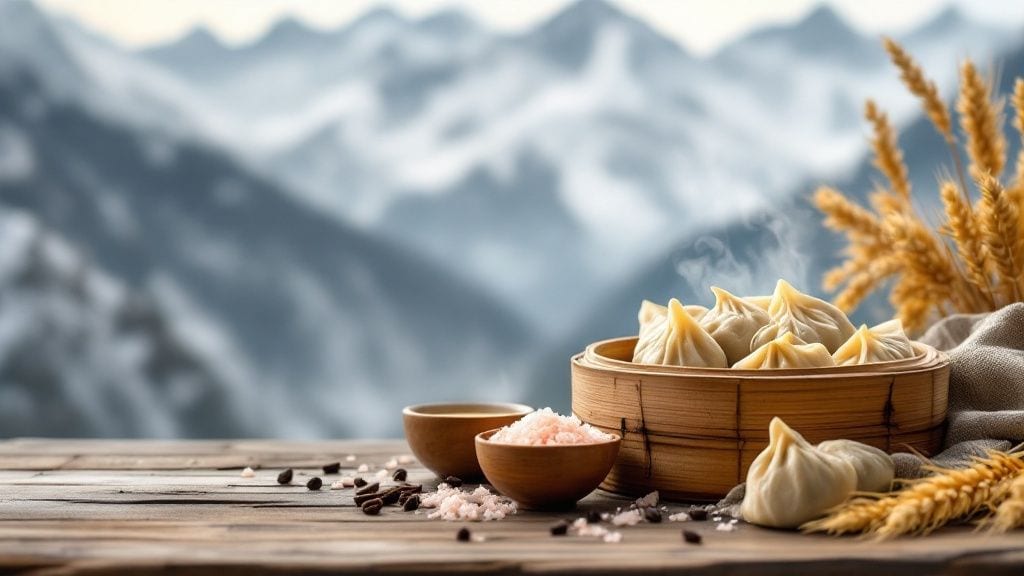
So, what exactly is Himalayan food? It’s not just one type of cooking. Instead, think of it as a vibrant collection of culinary traditions from places like Nepal, Tibet, and Bhutan, all shaped by the same rugged, high-altitude landscape.
This is a cuisine built on resilience. It’s all about hearty grains, warming spices, and preserved ingredients that offer real comfort and sustenance where it's needed most.
Defining the Flavors of the Himalayas
The best way to think about Himalayan food is to see it as a broad culinary family, a bit like "Mediterranean food." You know that dishes from Greece and Morocco are completely different, but they share common threads like olive oil and fresh vegetables thanks to a similar climate.
It's the same story in the Himalayas. The food across the mountain range is linked by geography and necessity, but each region still has its own distinct culinary personality.
This whole approach to food was born from survival. The short growing seasons and tough terrain forced communities to get creative and resourceful. This naturally led to a diet based on ingredients that were easy to grow, could be stored for a long time, and packed a serious energy punch. The result is a cuisine that is often simple, deeply nourishing, and full of soulful flavor.
Core Characteristics of Himalayan Cuisine
So what ties all these diverse food cultures together? When you dig in, a few key principles really stand out.
- Hearty and Substantial: These meals are designed to fill you up and keep you going. Grains like barley, buckwheat, and millet are the foundation of so many dishes.
- Warming and Aromatic: Spices are used for more than just flavor; they bring a comforting warmth. You'll find a lot of ginger, garlic, and turmeric, alongside unique spices like Timur (a relative of the Sichuan peppercorn).
- Emphasis on Preservation: With long, harsh winters, fermentation and drying are absolutely essential. Fermented greens (gundruk) and dried meats are common, adding wonderfully complex, umami-rich flavors.
At its heart, Himalayan cuisine is about making the most of what the mountains give you. It's a beautiful testament to the ingenuity of people living in one of the world's most formidable landscapes, who learned to create incredibly comforting and delicious meals from a limited pantry.
This culinary philosophy is perfectly captured in dishes like the iconic momo. These steamed dumplings, beloved across the entire region, show how simple ingredients—flour, meat or vegetables, and a handful of spices—can be transformed into something truly special. For a peek behind the curtain, you can learn more about the story behind one authentic Nepali kitchen.
Ultimately, to really get Himalayan food, you have to appreciate its context. It’s a cuisine that tells a story of community, resilience, and the deep connection between people and their environment—a story best told one delicious bite at a time.
The Foundational Ingredients of Himalayan Cuisine

If you really want to get a feel for Himalayan food, you have to look inside its pantry. The soul of this cuisine doesn’t come from fancy cooking methods; it’s born from a core set of powerful, resilient ingredients that have been shaped by one of the world's most extreme environments.
Think of it as a masterclass in making the most of what you have. Every ingredient tells a story about high altitudes, short growing seasons, and the deep-seated need for food that can sustain you through a long, harsh winter.
Hardy Grains: The Backbone of the Diet
In a landscape where growing rice is a luxury, if not an impossibility, other grains are the real workhorses. These aren't delicate crops. They're tough, nutrient-packed powerhouses that have adapted to thrive where most plants would fail.
- Barley: A cornerstone of Tibetan food, barley is often roasted and ground into a flour called tsampa, providing a vital source of energy.
- Buckwheat: Known for its earthy, nutty flavor, buckwheat is milled into flour for hearty noodles and flatbreads, especially in Nepal and Bhutan.
- Millet: This incredibly versatile grain can be cooked into a warm porridge or ground into flour for bread, offering a great gluten-free source of protein and fiber.
These grains aren't just filler; they're the bedrock of the Himalayan diet, providing the essential carbs needed to fuel life in the mountains.
Flavors Forged by Fire, Spice, and Time
When fresh produce is a rare sight for months on end, preservation becomes more than just a technique—it’s an art form. This necessity has given birth to some of the region's most distinctive and complex flavors.
Fermentation is absolutely central. In Nepal, for instance, leafy greens are fermented to create gundruk, a tangy, savory powerhouse that adds an incredible depth of umami to soups and curries. Meats like yak and lamb are often air-dried or smoked, a process that both preserves them for months and concentrates their flavor into something truly special.
Beyond preservation, the spice profile of Himalayan food is both warming and wonderfully unique.
The spices used in Himalayan kitchens do more than just add flavor; they provide a sense of inner warmth, a crucial comfort against the biting mountain cold. This philosophy turns every meal into a source of heat and energy.
You'll find signature spices like Timur, a relative of the Sichuan peppercorn, which delivers a tingling, citrusy numbness you won't find anywhere else. This is often balanced with the smoky, deep notes of black cardamom and the pungent, familiar heat of ginger and garlic.
The Iconic Pink Salt
Of course, no discussion of Himalayan ingredients would be complete without its most famous export: Himalayan pink salt. Mined mainly in Pakistan’s Punjab region, this mineral-rich salt is a fundamental seasoning in local kitchens. Its journey from ancient sea beds to a global wellness staple is nothing short of remarkable.
The global market for Himalayan salt was valued at USD 12.8 billion in 2025 and is projected to hit USD 20.8 billion by 2035. Iodized versions are especially popular, accounting for a massive 71.4% of the market share. If you're curious about this trend, you can read the full research about the Himalayan salt market.
A Culinary Tour of the Himalayan Regions
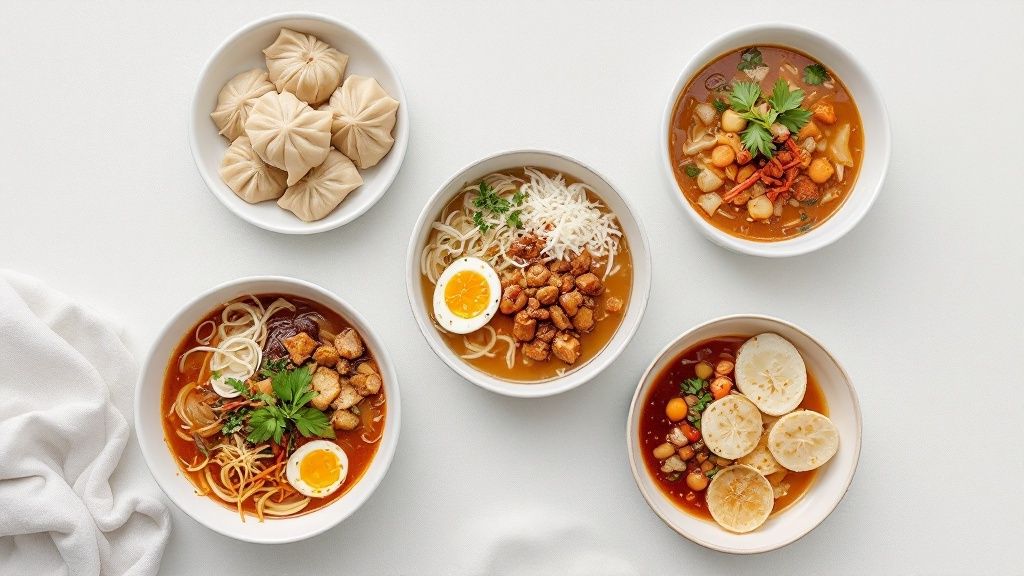
While the Himalayas might seem like one vast, monolithic mountain range, the food tells a different story. Each region has a culinary identity as unique as its valleys and peaks. To really get a feel for Himalayan food, you have to take a journey through the kitchens of Nepal, Tibet, and Bhutan.
Think of it less as a single cuisine and more as a vibrant mosaic of flavors. We’ll travel from the bustling crossroads of South and Central Asia to the isolated peaks of a remote kingdom, and every stop has its own story to tell.
Nepal: The Culinary Crossroads
Nepalese food is what happens when two massive culinary worlds—India to the south and Tibet to the north—meet and mingle. This unique position has created a wonderfully complex and balanced flavor profile that feels both familiar and entirely new at the same time.
The quintessential Nepali meal is Dal Bhat Tarkari. It’s a platter that features a nourishing lentil soup (dal), a mound of steamed rice (bhat), and a side of vegetable curry (tarkari). It might sound simple, but it’s the heart and soul of Nepali dining, providing the energy needed to thrive. The real magic is in the aromatics—cumin, coriander, turmeric—that give it a deep, savory character.
And of course, you can't talk about Nepal without mentioning momos. While these steamed dumplings have roots in Tibet, they've been adopted and perfected with such passion that they've become a national obsession in Nepal.
Tibet: The Roof of the World
Tibetan food is a masterclass in high-altitude survival. The cuisine is hearty, straightforward, and built to provide warmth and energy in one of the world's most challenging climates. Here, it’s less about intricate spice blends and more about getting the most out of every single ingredient.
The cornerstone of the Tibetan diet is tsampa, a roasted barley flour that’s incredibly versatile. It’s often mixed with the region's famous butter tea—a savory, rich drink made from tea leaves, yak butter, and salt—to form a nutrient-packed dough that’s perfect for a life on the move. It's the ultimate mountain fuel, sustaining everyone from monks to nomads.
Another staple is thukpa, a warming noodle soup often filled with vegetables or meat. It's pure comfort in a bowl, perfect for a cold day and a great example of the simple, soulful meals that define Tibetan cooking.
What defines the food of the Himalayas is not a single dish, but a shared philosophy of resilience. From the fiery chilies of Bhutan to the comforting barley of Tibet, each meal is a testament to creating nourishment and warmth from the land.
Bhutan: The Land of the Thunder Dragon
If you're someone who loves bold, spicy food, Bhutan is your destination. Bhutanese cuisine stands in a class of its own, mainly because of its unapologetic love for chili peppers. Here, chilies aren't just a spice; they're treated as a main vegetable. The result is food that's intense, cheesy, and completely unforgettable.
The undisputed national dish is Ema Datshi. This fiery stew is a potent, soul-warming mix of chili peppers and local cheese (datshi). It's almost always served with a side of red rice, whose nutty flavor provides the perfect counterpoint to the chilies' powerful heat.
This focus on cheese and chilies speaks to Bhutan's history of relative isolation, which allowed it to cultivate a food culture utterly distinct from its neighbors. A meal here is a true adventure, showing off a much fierier side of what Himalayan food can be.
Iconic Himalayan Dishes You Need To Try
Alright, let's move past the ingredients and get to the good stuff—the dishes themselves. This is where the story of Himalayan food really comes to life. These are the meals you’ll find simmering in mountain homes and served up fresh from street-side stalls. Think of this as your tasting menu for the region’s most cherished flavors.
The cooking methods here are born from the environment. They're all about efficiency, preserving nutrients, and, most importantly, creating warmth.
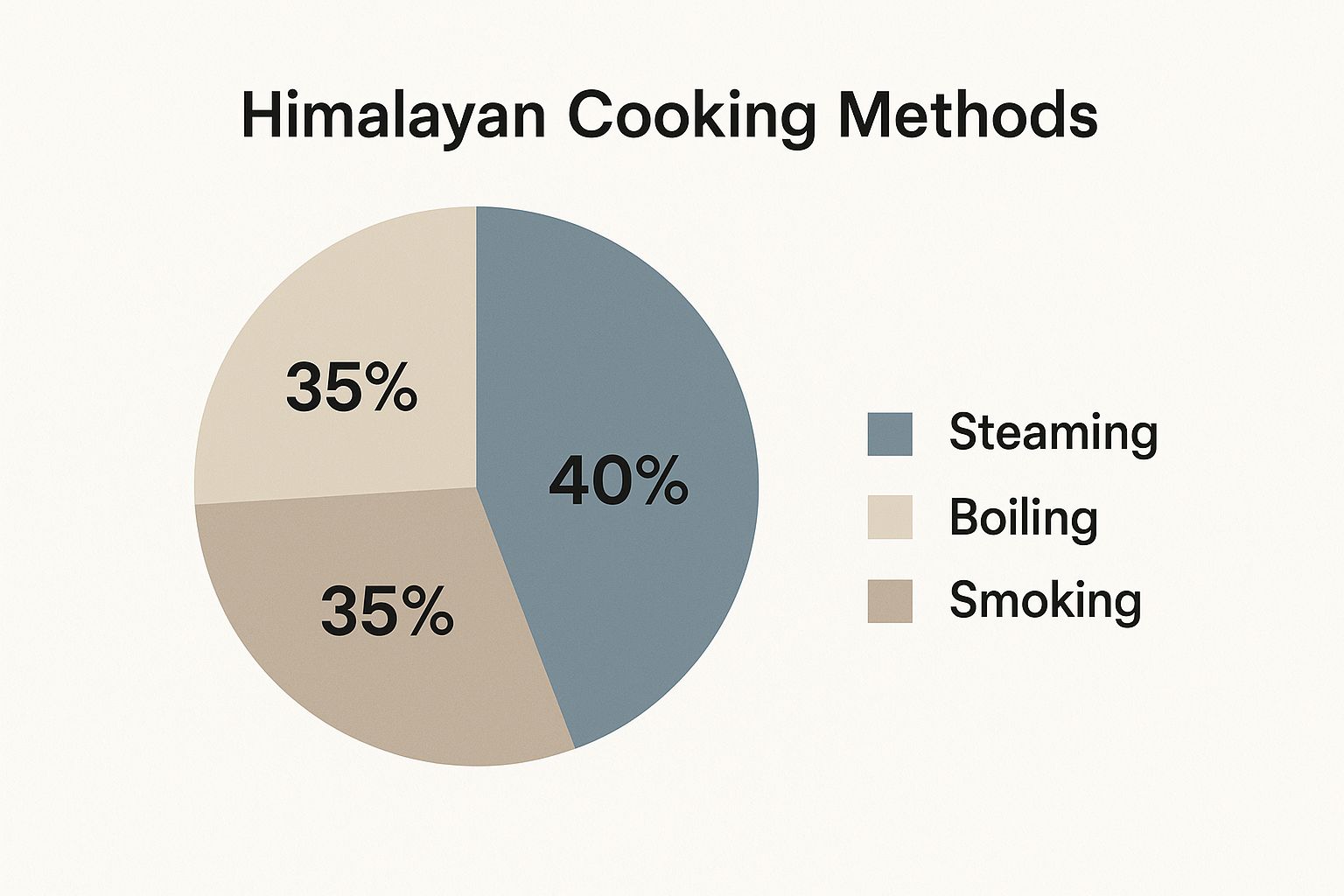
You can see that gentle cooking is key. Steaming (40%) and boiling (35%) are the go-to techniques. It makes perfect sense for high altitudes, where you want comforting, easy-to-digest meals that pack a nutritional punch.
Momos: The World-Famous Dumplings
You simply can't talk about Himalayan food without mentioning momos. These delicate, pleated dumplings have become the unofficial ambassadors for the entire region, loved everywhere from Tibet to Nepal and far beyond. They might look simple, but the real craft is in getting that paper-thin wrapper to hold a burst of juicy, flavorful filling.
Inside, you'll typically find seasoned minced meat—like chicken, yak, or buffalo—or a mix of finely chopped vegetables. The magic comes from the spices: ginger, garlic, cilantro, and often a touch of Timur peppercorn for that signature, slightly numbing tingle.
Momos are wonderfully versatile, served in a few key ways:
- Steamed: This is the classic preparation, yielding a soft, tender dumpling that practically melts in your mouth.
- Fried: For those who love a bit of crunch, deep-frying turns them golden and crispy.
- Pan-fried: A brilliant best-of-both-worlds approach, where dumplings are steamed and then seared on one side for a mix of soft and crispy textures.
But the momo experience is only complete with the dipping sauce, or achar. This tangy, often tomato-based condiment is non-negotiable. It adds a spicy, savory, or sour kick that cuts through the richness of the filling. To truly understand what the fuss is about, exploring an authentic menu of handcrafted Nepali momos is the perfect place to start.
Thukpa: The Ultimate Comfort Soup
Picture this: it’s a cold, windy day up in the mountains. What’s the one meal you’re craving? For countless people, the answer is Thukpa. This is a hearty, warming noodle soup that feels like a hug in a bowl—pure Himalayan comfort food.
At its heart, Thukpa is a simple dish of hand-pulled noodles swimming in a savory broth, loaded with fresh vegetables and your choice of meat. The flavor is clean and aromatic, built on a base of ginger, garlic, and a subtle blend of Himalayan spices. It’s a beautifully balanced one-bowl meal, hitting all the right notes of carbs, protein, and veggies.
Thukpa is so much more than a soup. It's a bowl of warmth that perfectly captures the spirit of mountain hospitality. It’s an honest, simple dish designed to comfort and sustain you.
Dal Bhat: The Lifeblood of Nepal
While momos might get all the international fame, Dal Bhat is the true engine of daily life, especially in Nepal. This platter isn't just a meal; it's the foundation of the nation's diet, often eaten twice a day, every day. It's built on three core pillars:
- Dal: A wonderfully flavorful, soupy curry made from lentils.
- Bhat: A generous mound of steamed rice.
- Tarkari: A simple, seasoned vegetable curry.
Together, these components create a nutritional powerhouse, delivering the perfect balance of protein, carbohydrates, and vitamins. Dal Bhat is almost always served with a side of spicy pickle (achar) and sometimes a piece of meat, making it a complete, deeply satisfying meal that literally fuels the country.
To help you navigate these incredible dishes, here's a quick guide to what you can expect from each.
A Flavor Guide to Must-Try Himalayan Dishes
| Dish | Region of Origin | Flavor Profile | Main Ingredients |
|---|---|---|---|
| Momo | Tibet & Nepal | Savory, juicy, aromatic, with a tangy or spicy dipping sauce. | Flour, minced meat (chicken/pork/yak) or vegetables, ginger, garlic, cilantro. |
| Thukpa | Tibet | Hearty, savory, soupy, and warming with mild spice. | Noodles, broth, vegetables (carrots, greens), meat, ginger, garlic. |
| Dal Bhat | Nepal | Earthy, comforting, and wholesome. Flavors can range from mild to spicy. | Lentils, rice, seasonal vegetables, turmeric, cumin, coriander. |
| Sel Roti | Nepal | Slightly sweet, crispy on the outside, soft and chewy on the inside. | Rice flour, sugar, ghee, cardamom. |
| Gundruk | Nepal | Tangy, sour, and slightly pungent. | Fermented leafy green vegetables. |
This table is just a starting point. Each of these dishes has countless variations from one village—or even one family—to the next, which is part of what makes exploring this cuisine so exciting.
How Himalayan Food Conquered The World
https://www.youtube.com/embed/n5WUPdzUCDk
Not that long ago, finding real Himalayan food felt like a treasure hunt if you weren't actually in the Himalayas. But today, the soulful, deeply satisfying flavors of Nepal and Tibet are quietly popping up in cities all over the world. This isn't just another passing food fad; it's a story about people, heritage, and the undeniable power of a perfect dumpling.
The global journey of Himalayan cuisine wasn't a calculated marketing campaign. It was powered by families. As people from Nepal and Tibet moved to new countries, they brought their most treasured recipes with them, opening small restaurants that became vibrant cultural centers. These places introduced dishes like momos and thukpa to their new neighbors, winning over curious foodies one plate at a time.
This slow-and-steady introduction built a rock-solid foundation for the cuisine’s recent explosion in popularity. While it's tricky to pin down exact numbers, the 2010s and early 2020s saw a huge spike in Tibetan and Nepalese restaurants opening in big cities across the US, UK, and Australia. Just look at London—as of 2025, the city is home to over 50 dedicated Nepalese restaurants, a massive jump from fewer than 10 just a decade ago. If you want to dig into how food trends catch fire, you can discover more insights about these food trends.
The Irresistible Charm of the Momo
So, what was the spark that turned this quiet appreciation into a full-on culinary movement? A huge part of the answer is one simple, delicious word: momos. These steamed dumplings have become the ultimate ambassador for Himalayan food. They're familiar enough not to be intimidating—most cultures have a dumpling of some sort—but they have a unique character that makes them feel new and exciting.
It's the combination of the delicate wrapper, the juicy, savory filling, and that absolutely essential side of tangy achar (dipping sauce) that makes them so addictive. Momos are perfect for sharing, they look great on Instagram, and they are built for the modern street food scene. This has made them a runaway hit at food truck gatherings, local breweries, and community festivals. For many, these events are their very first taste of Himalayan cooking, creating new converts with every single order. In fact, you can often find a food truck serving up momos at the top 4 local food and music events.
The secret to Himalayan food’s success is its honesty. It’s warm, nourishing, and feels both exotic and strangely familiar at the same time. It speaks to our growing desire for authentic food that has a real story behind it.
Why It Clicks With Today's Eaters
Beyond the all-powerful momo, Himalayan cuisine connects with people today for a few other important reasons. For one, many of its staple dishes are naturally healthy, built around lentils, fresh vegetables, and lean proteins. This fits perfectly with the modern diner’s shift toward more wholesome, plant-focused meals.
It also offers a genuine sense of adventure. For food lovers who feel like they've tried everything, Himalayan dishes open up a whole new flavor vocabulary—from the tingly, citrusy buzz of Timur peppercorns to the deep, funky umami of fermented greens. At the end of the day, it's just good old-fashioned comfort food. It’s simple, satisfying, and warms you from the inside out, a feeling that everyone, everywhere can understand.
Common Questions About Himalayan Food
As more people discover the incredible world of Himalayan food, a few questions naturally pop up. It’s a cuisine that can feel both comforting and wonderfully new all at once.
Think of this as your field guide. We'll tackle the most common queries, from spice levels to what makes those little dumplings so special, so you know exactly what you’re getting into.
Is Himalayan Food Spicy?
This is probably the number one question we get, and the honest answer is: it really depends on where the dish comes from. The spice level across the Himalayas is anything but uniform.
- Bhutanese food? Brace yourself. It’s famous for being fiery, where chilies are often treated as a main vegetable, not just a spice.
- Tibetan cuisine, on the other hand, is generally much milder. The focus is more on creating deep, savory flavors with ingredients like ginger and garlic to warm you from the inside out.
- Nepali food often hits that perfect sweet spot. It uses a beautiful, complex blend of spices like cumin, coriander, and the tingling Timur pepper. The goal is aromatic depth, not just raw heat, and it can easily be dialed up or down.
Are There Good Vegetarian And Vegan Options?
Oh, absolutely. Himalayan cuisine is a paradise for anyone following a plant-based diet. This isn't a recent trend; it's deeply rooted in the culture, thanks to Buddhist influences and the simple realities of mountain agriculture.
The national dish of Nepal, Dal Bhat Tarkari (a platter of lentil soup, rice, and vegetable curry), is a prime example and is naturally vegetarian. You'll also find that iconic dishes like momos and thukpa are just as common with vegetable fillings or simmered in a rich vegetable broth. Potatoes, leafy greens, and all kinds of lentils aren't just side dishes here—they're the stars.
At its heart, Himalayan cooking is all about resourcefulness. It’s about making soulful, nourishing meals with what the land provides. That means vegetables and legumes are never an afterthought; they are the main event.
What Makes Momos Different From Other Dumplings?
It’s true, momos belong to the big, happy global family of dumplings. But a few special touches give them their own unique identity. Originally from Tibet, they've become an absolute staple across the entire Himalayan region.
First, the wrapper is often thinner and more delicate than what you might find in other dumplings. This creates the perfect texture—a light pouch that barely contains the juicy, aromatic filling.
Speaking of the filling, it’s seasoned with a distinct combination of ginger, garlic, cilantro, and sometimes that signature Timur pepper, which leaves a pleasant little tingle on your tongue.
But the real secret? It’s all about the dipping sauce, or achar. A tangy, often tomato-based condiment, the achar is just as important as the momo itself. It adds a bright, spicy, and savory kick that brings the whole experience together.
Ready to taste what all the fuss is about? MoMoMandu : Authentic Nepali Kitchen is bringing the real deal—the heart and soul of Himalayan street food—right here to the Triangle.
Find our truck's next stop at https://momomandunc.com and taste the difference for yourself.
Article created using Outrank